Homeowner roofing guide

Why Roof Leaks Often Start Around the Chimney

Chimney flashing problems are one of the most common residential leak sources.

Chimneys create several transitions at once: roof-to-wall contact, step flashing, counter flashing and masonry surfaces that move and age differently than shingles.

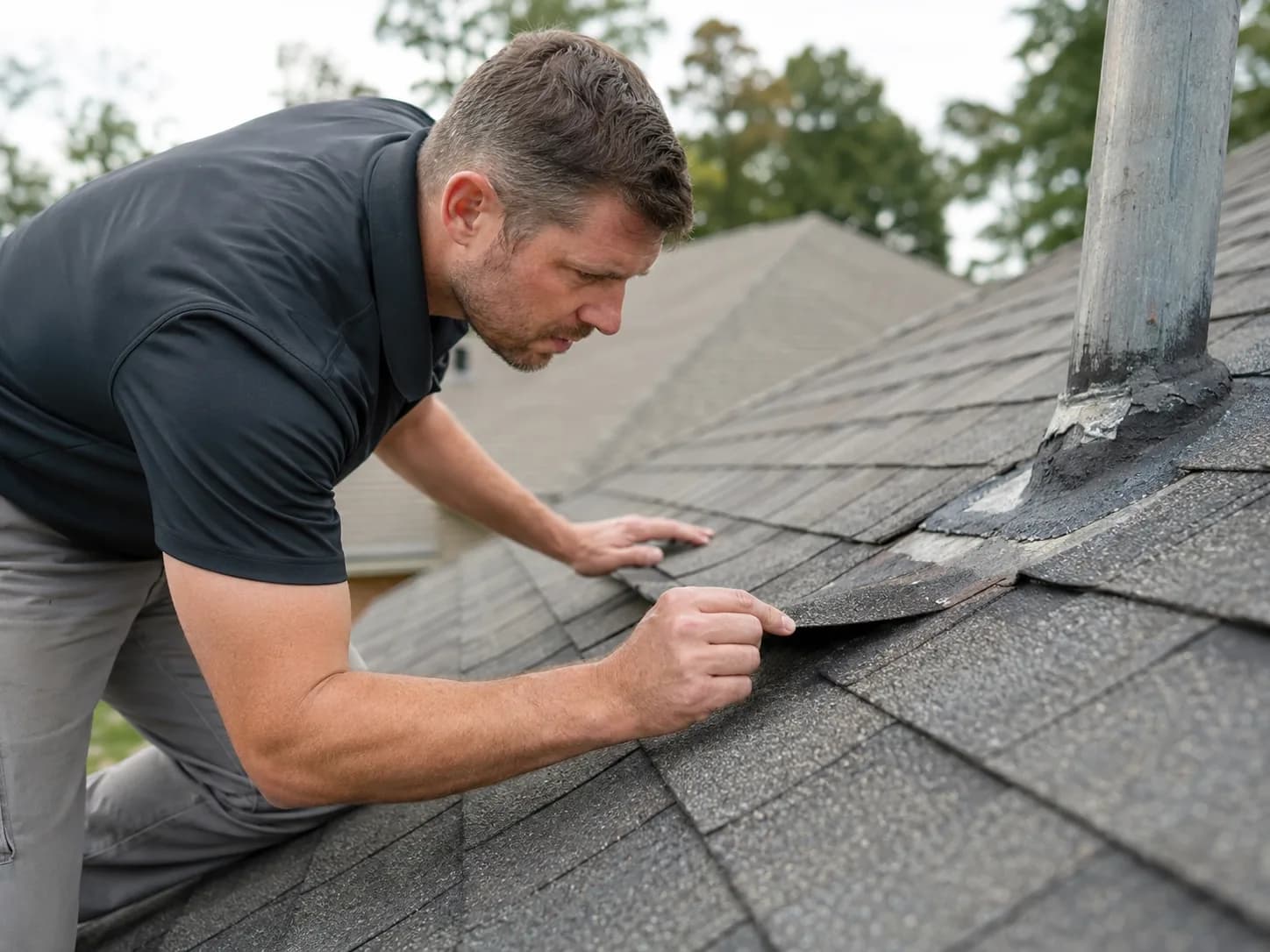
A close inspection of damaged shingles and flashing around a roof vent.

Quick answer

What homeowners should know first

If you see water stains near a fireplace wall or chimney chase, the problem may involve flashing, sealant failure, masonry deterioration or the shingles immediately surrounding the chimney. A targeted inspection is the right first step.

Homeowner checklist

Practical next steps

  • Look for stains on the ceiling or walls around the fireplace.
  • Watch for leaks after wind-driven rain or repeated storms.
  • Do not rely only on surface sealant as a permanent solution.
  • Ask whether the surrounding shingles are also worn or damaged.
01

How chimney flashing works

Chimney flashing relies on correctly layered materials that direct water away from the base of the chimney. When those layers are loose, corroded or improperly integrated, water can bypass the intended path.

02

Why older chimneys are common leak points

As homes age, mortar joints, sealants and metal flashing can all deteriorate at different rates. That combination often creates leak paths before the rest of the roof fully fails.

03

Repair versus replacement around a chimney

Many chimney leaks can be repaired locally if the surrounding shingles are still serviceable. If the roof is already near the end of its life, homeowners may be better served by discussing the chimney detail as part of a replacement.

Guide FAQs

Common questions about this roofing topic

The answers provide general context; the actual roof condition still determines whether repair, inspection or replacement is appropriate.

Can bad chimney flashing leak without missing shingles?

Yes. Flashing can fail while the field shingles still look fairly normal from the ground.

Is caulk enough to fix a chimney leak?

Not usually. Caulk may play a role in certain details, but it is rarely the full permanent repair when flashing itself is compromised.

Need help with this roof issue?

Call to talk through the next step for your home.

Use the guide for context, then call to discuss the roof condition, property location and most practical next step.

Call (877) 497-9711