
Quick answer
What homeowners should know first
Ceiling stains after rain may come from a roof leak, but the exact source could be shingles, flashing, roof penetrations or a low-slope area. Document the stain and arrange a roof-focused inspection.
Homeowner roofing guide
Interior stains are a sign worth investigating even if the roof is not actively dripping.
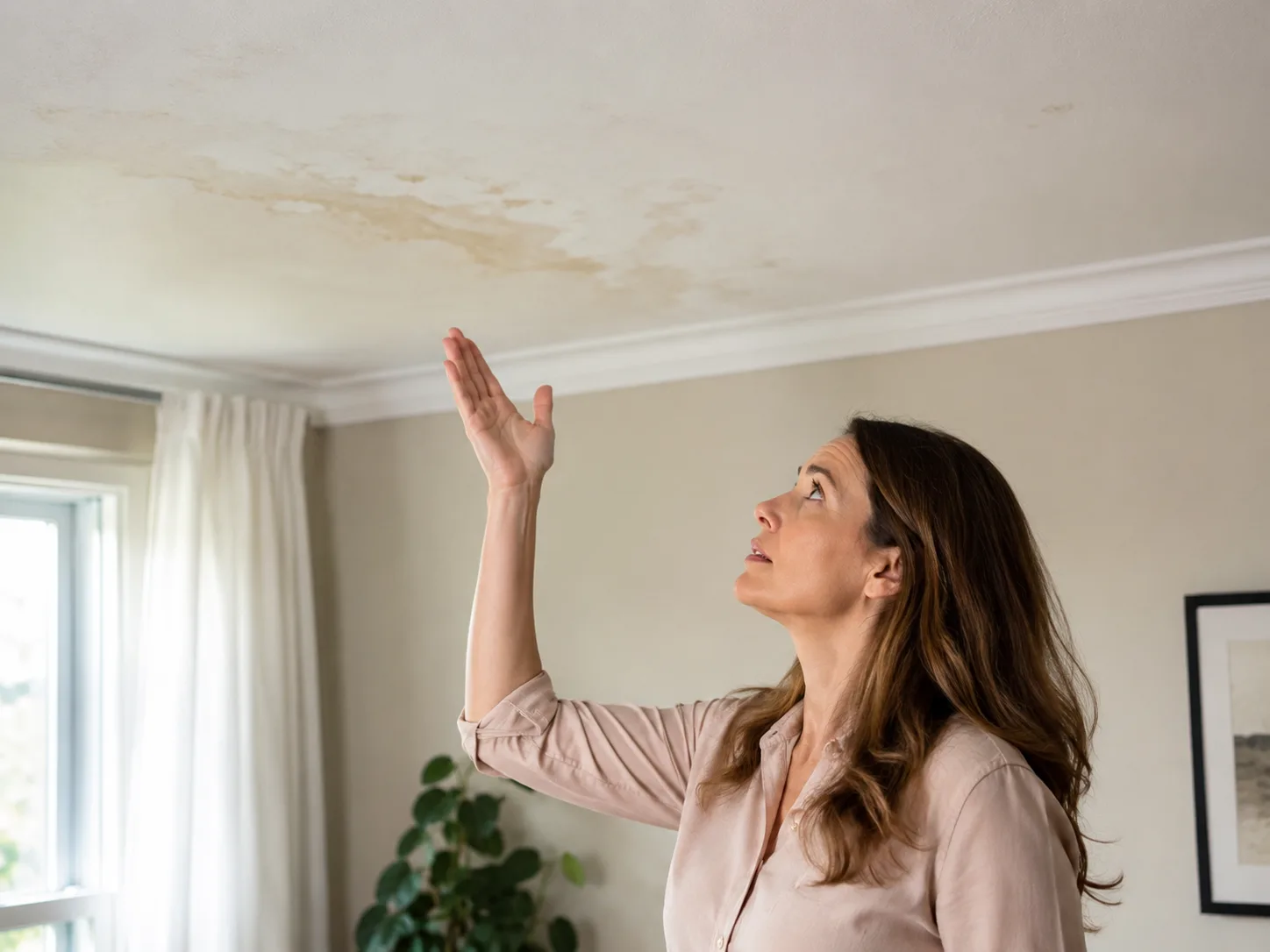
A brown ring or new ceiling stain after rain usually means moisture has already moved through part of the building system. Even if the stain dries, the source still needs attention.
Quick answer
Ceiling stains after rain may come from a roof leak, but the exact source could be shingles, flashing, roof penetrations or a low-slope area. Document the stain and arrange a roof-focused inspection.
Homeowner checklist
Moisture can keep wicking into drywall or plaster even after the original rainfall stops. That is why the visible stain may expand or darken over several days.
The stain marks where water collected, not necessarily where it entered the roof. A roof valley or vent above a different part of the attic can still lead to a stain several feet away.
If the ceiling is bulging, dripping or showing mold growth, homeowners should move quickly because interior finishes and structural components may already be affected.
Guide FAQs
The answers provide general context; the actual roof condition still determines whether repair, inspection or replacement is appropriate.
No. Some leaks dry between storms and return later.
Yes, but roof leaks are common enough that a roofing evaluation is still important when stains follow rainfall.
Related services
Related reading
Local roofing service areas
Roofing Care Pros now focuses local service coverage on Lake Jackson and four nearby Brazoria County cities so roofing guides connect naturally to a smaller, more relevant local market.
Need help with this roof issue?
Use the guide for context, then call to discuss the roof condition, property location and most practical next step.