Homeowner roofing guide

Why Is My Roof Leaking?

A homeowner guide to common leak sources and the next step to take.

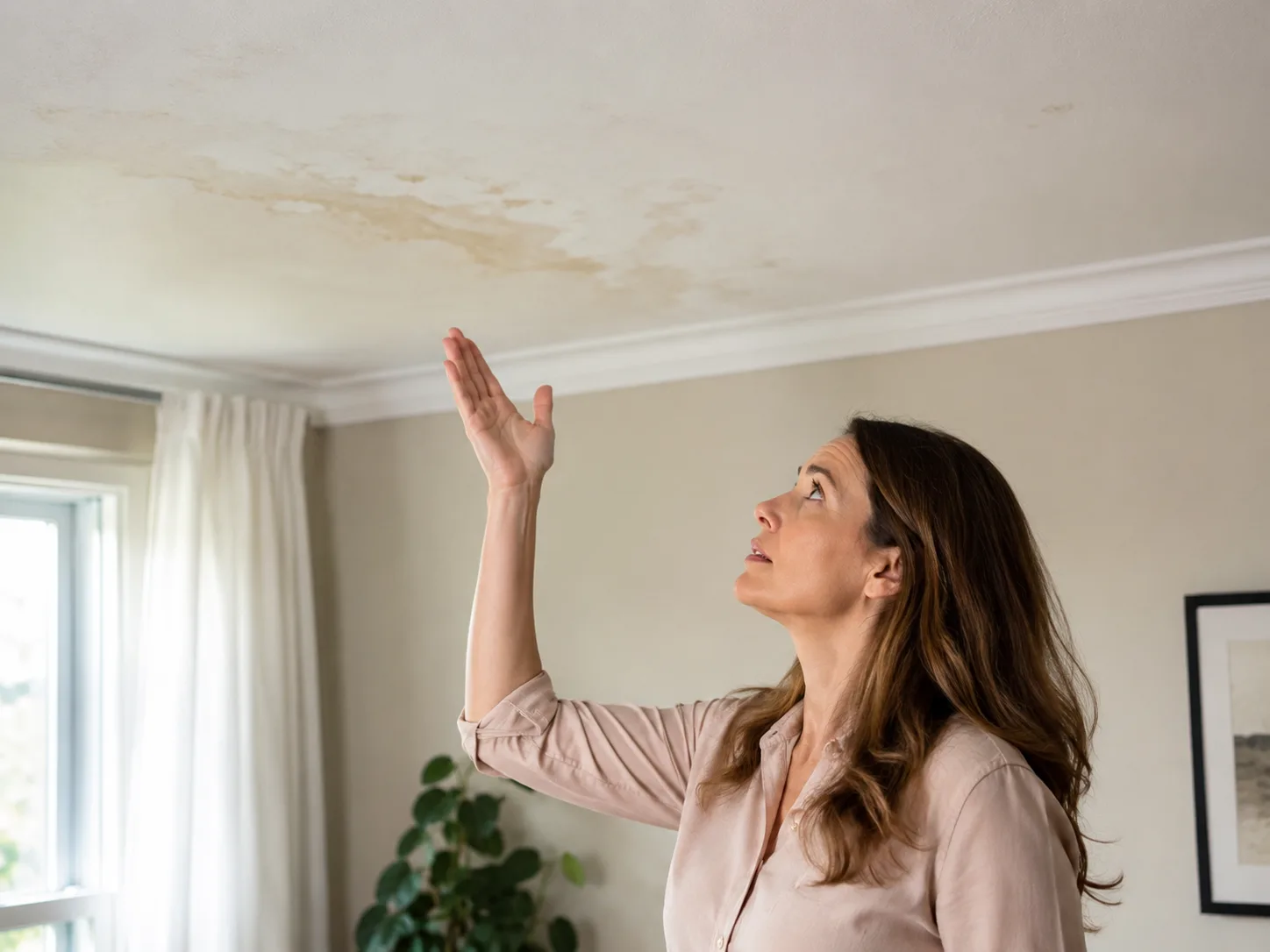
A roof leak rarely starts exactly where water shows up indoors. Water can travel along decking, rafters, insulation and wall cavities before it becomes visible on a ceiling or wall.

A homeowner noticing a ceiling water stain caused by a roof leak.

Quick answer

What homeowners should know first

The most common leak sources are damaged shingles, worn flashing, pipe boots, roof vents, valleys and storm-damaged penetrations. A roof inspection is the best way to confirm the true source before deciding on repair or replacement.

Homeowner checklist

Practical next steps

  • Check when the leak appears, such as after heavy rain or wind-driven rain.
  • Look for ceiling stains, bubbling paint or damp attic insulation.
  • Note whether the leak is near a chimney, vent pipe, valley or skylight.
  • Avoid climbing on the roof if conditions are wet or unsafe.
01

Common places a roof leak starts

Leak paths often begin around penetrations and transitions. Chimney flashing, vent boots, sidewall flashing and open valleys are some of the most common failure points because they combine multiple materials and joints.

02

Why the interior stain may be far from the roof problem

Water does not always drip straight down. It can follow framing members or roof decking before it appears indoors, which is why homeowners often misjudge the actual source without an inspection.

03

When a leak may point toward replacement

One isolated leak does not automatically mean the full roof has failed. However, if the roof is older, has widespread wear or has several leak points across multiple slopes, replacement may become the better long-term discussion.

Guide FAQs

Common questions about this roofing topic

The answers provide general context; the actual roof condition still determines whether repair, inspection or replacement is appropriate.

Can a small leak become a big repair problem?

Yes. Even a small leak can damage insulation, drywall, trim and framing over time if it is ignored.

Should I patch a roof leak myself?

Temporary ground-safe steps indoors may help limit damage, but walking on the roof or guessing at the source can make the problem worse.

Need help with this roof issue?

Call to talk through the next step for your home.

Use the guide for context, then call to discuss the roof condition, property location and most practical next step.

Call (877) 497-9711